Work Samples | Resume | LinkedIn | About | Contact
Case Study 2: Enhancing The Weather Company’s Running App
Disclaimer: This case study was prepared by Ruth Gilleran, Senior Lecturer, Patricia J. Guinan, Associate Professor, and Salvatore Parise, Associate Professor, of Babson College as part of their Entrepreneurial Leadership Collection. This has been licensed to Harvard Business School for publication and originally published in November 2015. Click here to access the full case study.
Situation
“I am never one to look at weather apps because I only look at the temperature. But I think more and more people who use apps in general would like to get the most information about whatever they are doing or planning to do so they can plan ahead. One can never be too prepared when planning a trip or activity!”
Jason, Late 30s, Social Media Manager
The Problem
In 2013, The Weather Company (TWC) was facing significant challenges to its business due to a shift in consumer preferences for mobile experiences. At the time, Nielsen reported that The Weather Channel (owned by TWC) averaged a five-year low of 211K daily viewers, down from 273K the previous year. As a result of declining ratings and evidence indicating consumers were more frequently using their smartphones to check the weather, DIRECTTV blacked out The Weather Channel to its 20M subscribers, which represented one-fifth of TWC’s total audience. Since TWC needed to provide weather data differently to respond to these challenges, it launched the Outsider app, TWC’s first lifestyle-related weather app for running enthusiasts.
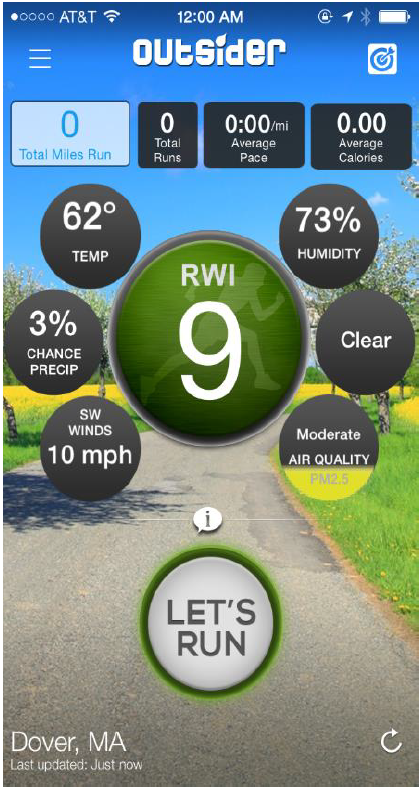
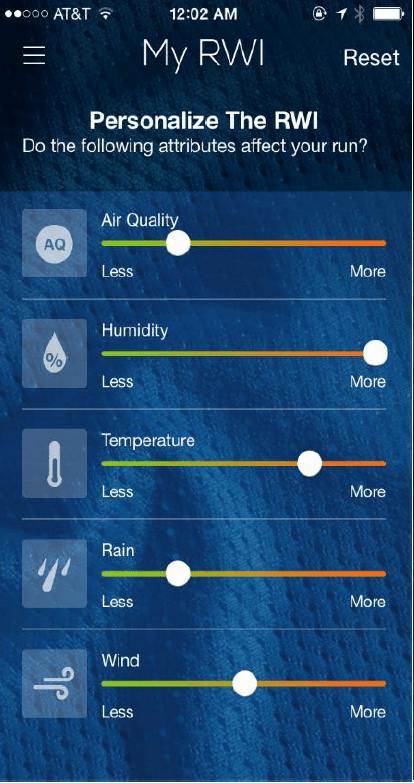
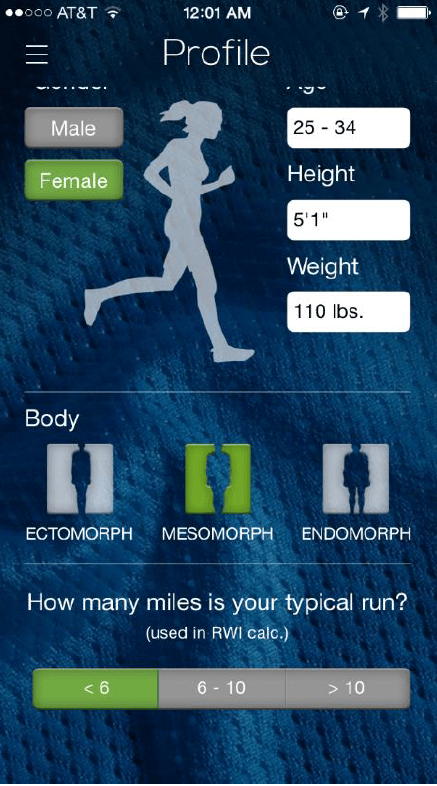
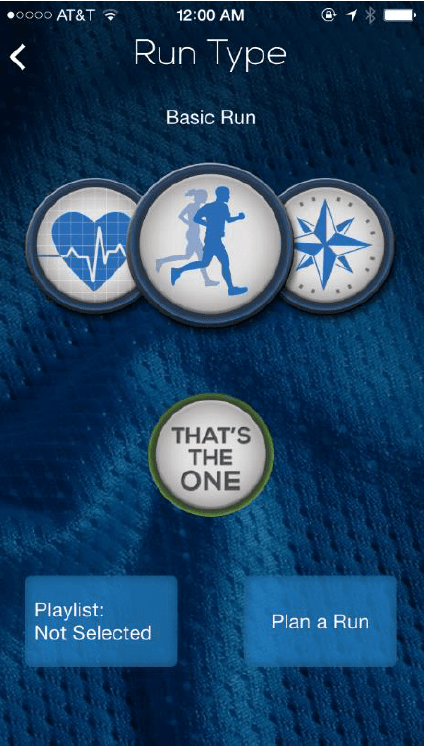
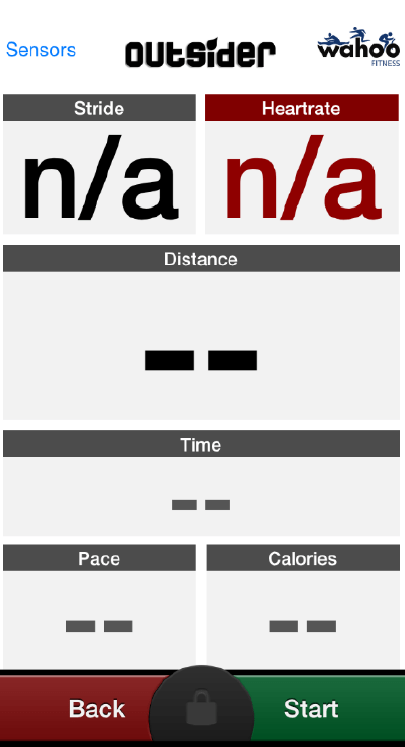
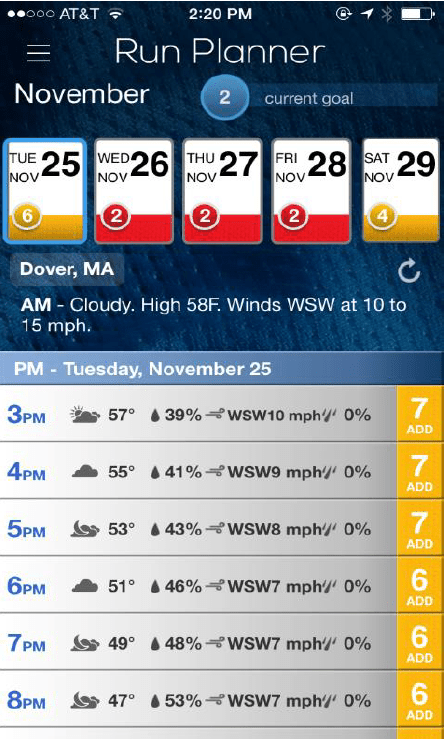
TWC’s early success with the app can be attributed to their big data platform and processes and highly accurate weather forecasting reputation. However, weather data sets have become more widely available to the public and will only continue trending this way in the future. This is problematic because other companies can access this information to develop their own apps to compete with the Outsider app. Also, TWC risks losing customers to these competing apps, which could lead to a loss in revenue from ad sales and monthly subscriptions.
Tasks
The following tasks were completed to address the challenges raised by this case study:
- Synthesize research findings to formulate a problem statement
- Generate ideas using various ideation methods to identify possible design solutions
- Develop clickable prototype based on selected ideas
- Test prototype on users and gather feedback
My Actions
Research
In order to get a better understanding about TWC and the Outsider app, I used a combination of primary and desk research methods to answer the following key questions:
- What is The Weather Company?
- Who are the key players and decision-makers?
- Who oversees the Outsider app?
- Who are the Outsider app’s key competitors, and how are they similar/different?
- What are the key differences between B2B and B2C models?
- What are some of the latest lifestyle-related/fitness-oriented trends seen in the market today?
- How do people generally feel about checking the weather?
Early Insights
I gathered the following preliminary research data from an online search of existing materials and sources to better understand TWC, the current financial health of TWC, who the key players and decision-makers are, Outsider app key features, latest fitness trends, and differences between B2B and B2C models.

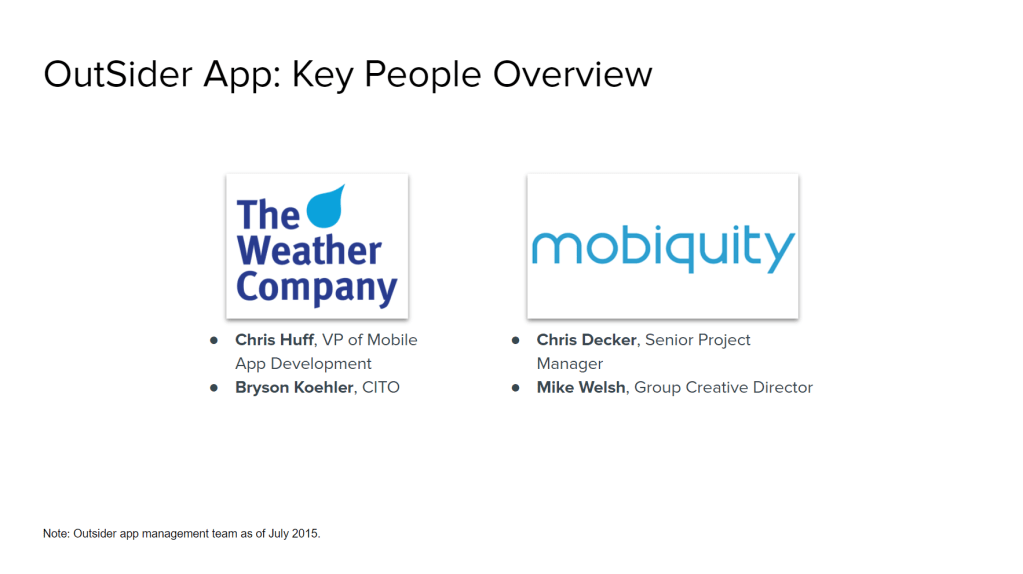

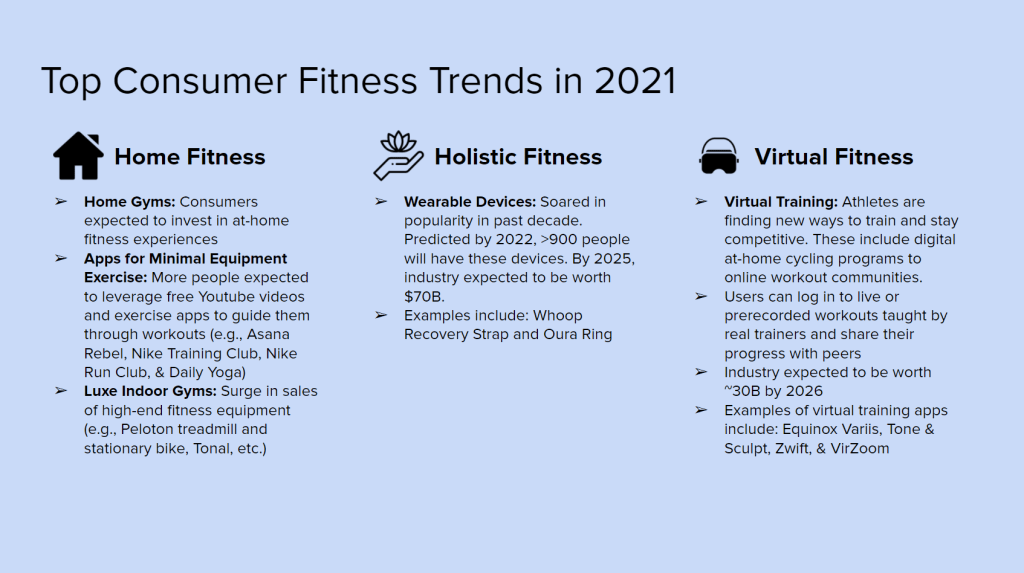

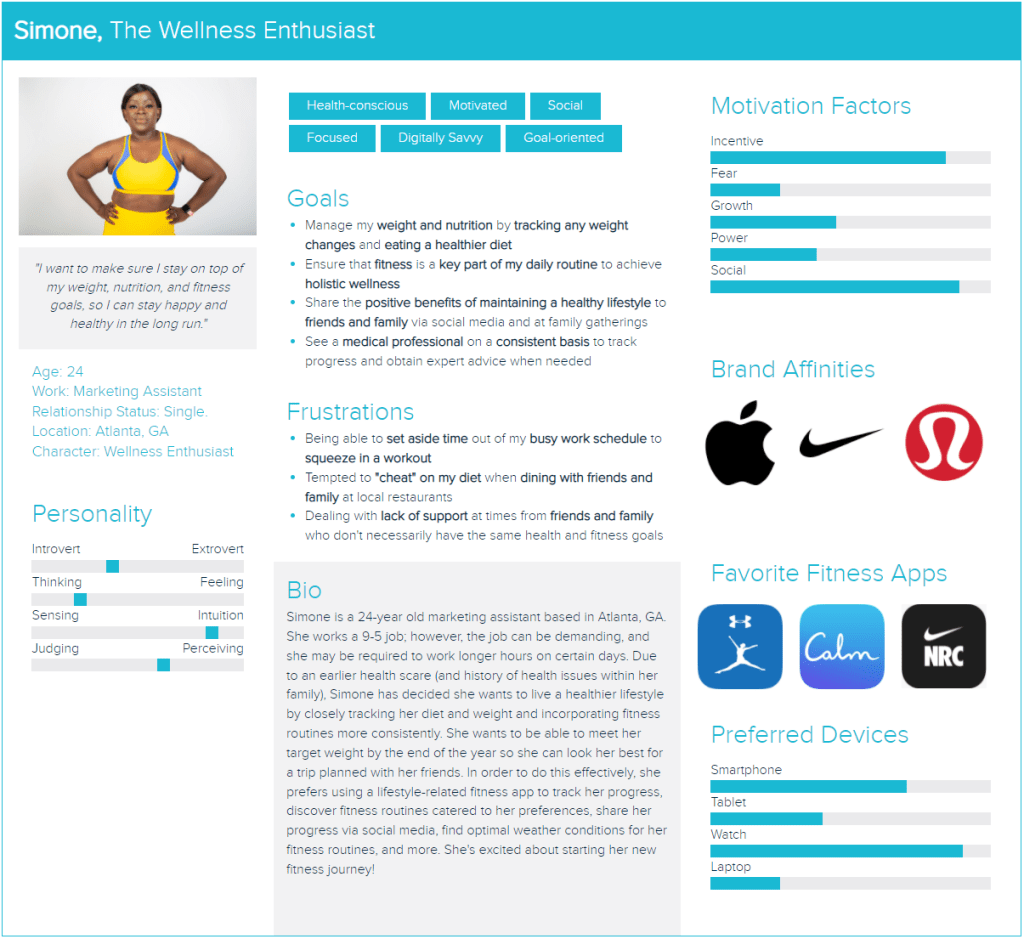
In order to get a better understanding of the Outsider app’s target audience (and mobile fitness apps in general), I constructed the following user persona based on 2017 data from the National Center for Biotechnology Information (NCBI) and fitness consumer research findings from McKinsey.
The findings below detail the strengths, weaknesses, opportunities, and threats of TWC and leading fitness app competitors targeting running enthusiasts.


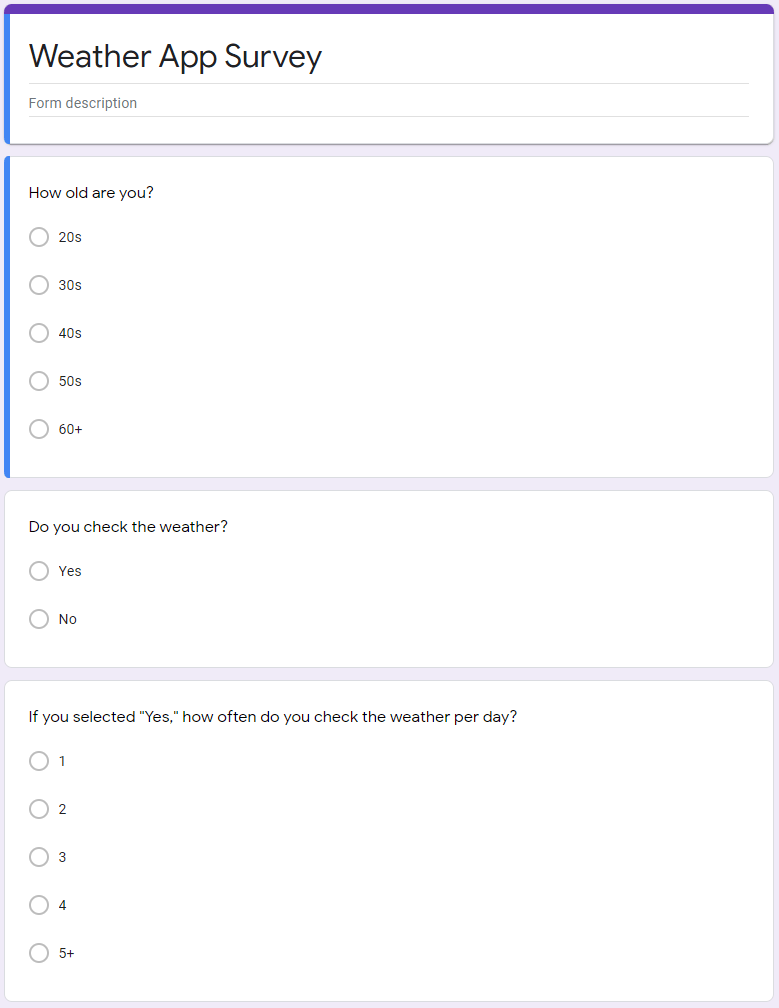
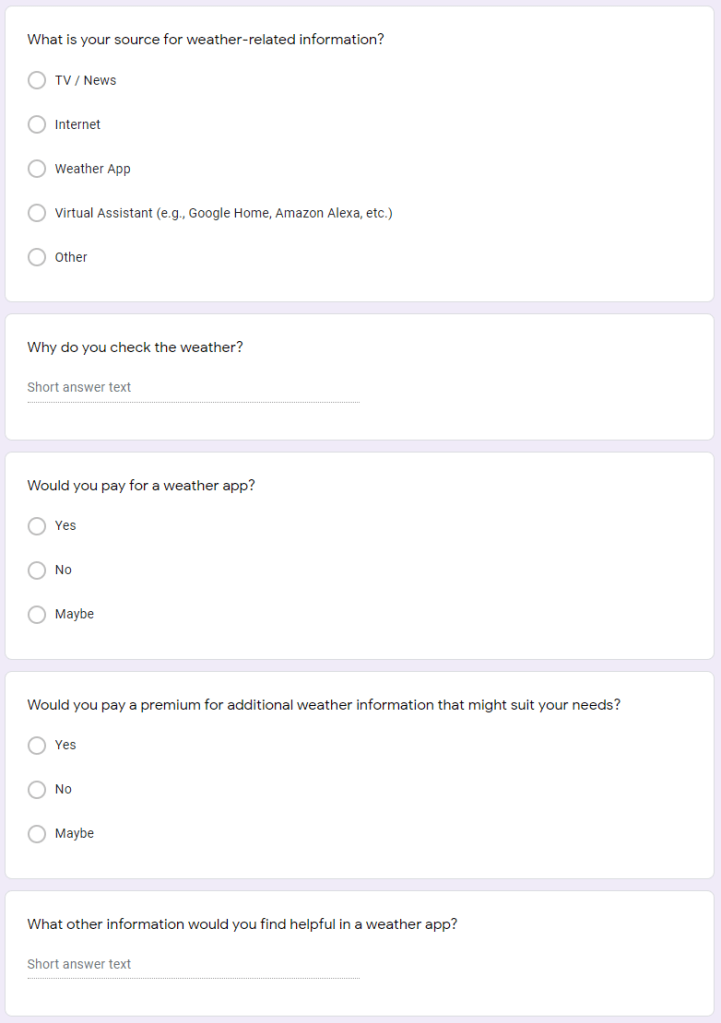
I conducted an online survey on 21 people to gather direct feedback on their views and attitudes toward checking the weather. See below to view the survey distributed to participants as well as key feedback highlights.

Ideation
After gathering a sufficient amount of data from primary and desk research methods, I formulated the following “How might we…” questions to trigger ideas that could possibly address TWC’s problem.
- How might we…
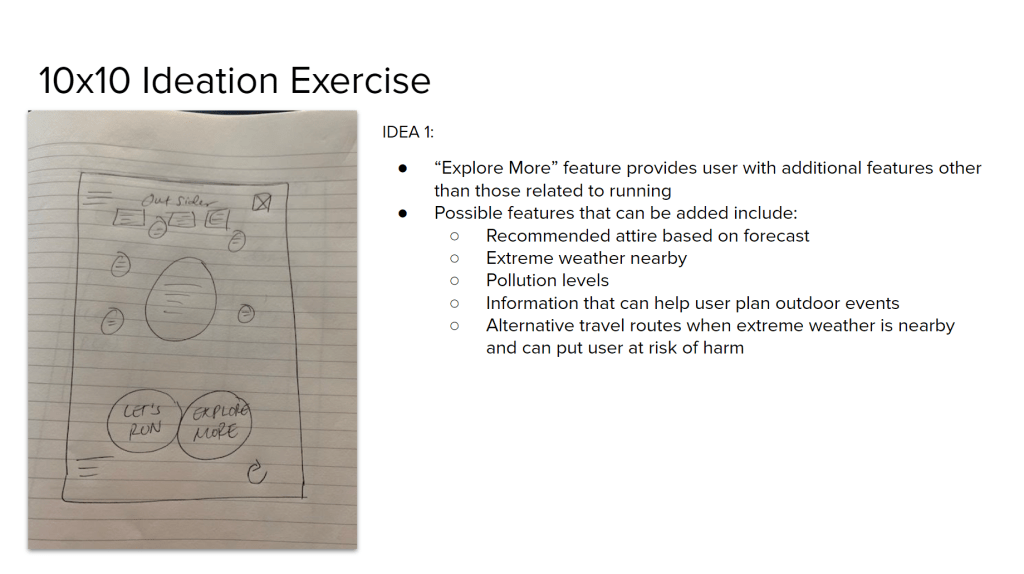
- Incorporate other features based on weather data that appeals to non-runners and expand the current customer base?
- Increase customers’ engagement time with the app to drive revenue growth?
- Adapt to changing consumer fitness trends/behaviors due to the COVID-19 pandemic?
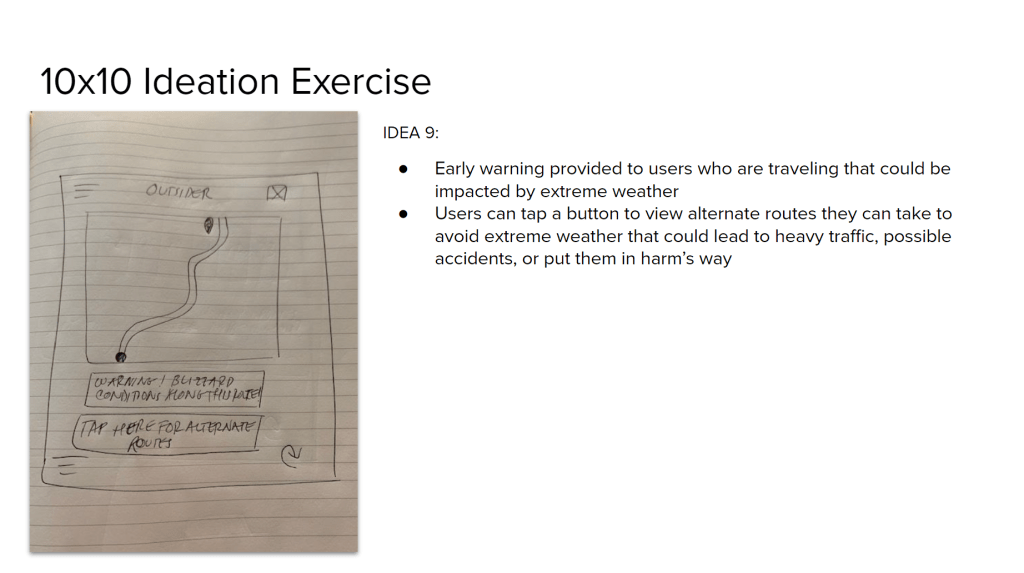
- Help drivers avoid being caught in extreme weather that could impact their travels plans and put their lives in danger?
- Expand into other business sectors that are highly reliant on weather data for their operations to drive revenue growth?
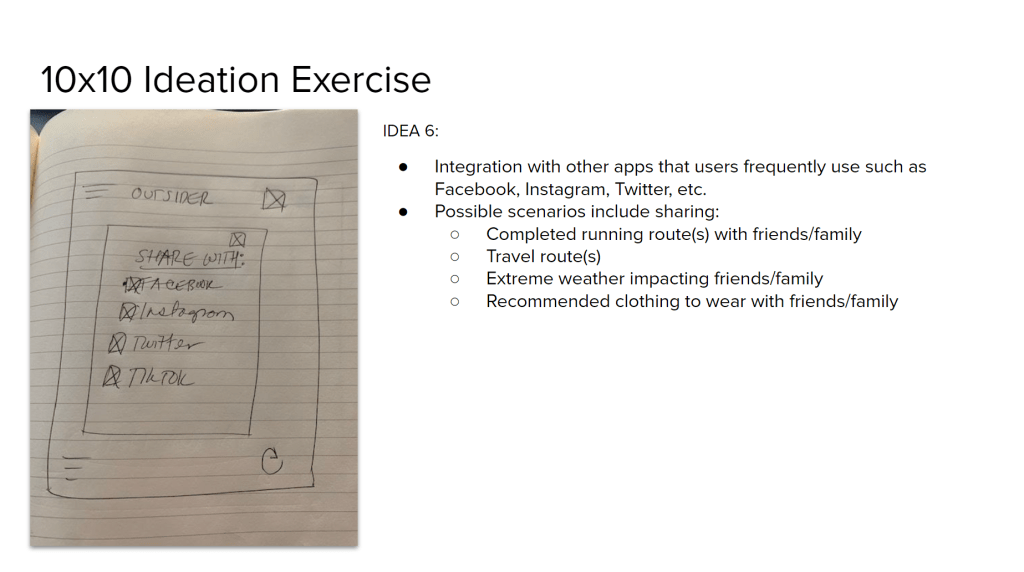
- Integrate the app with other apps that customers frequently use in their daily lives so they can derive even more pleasure from the app?
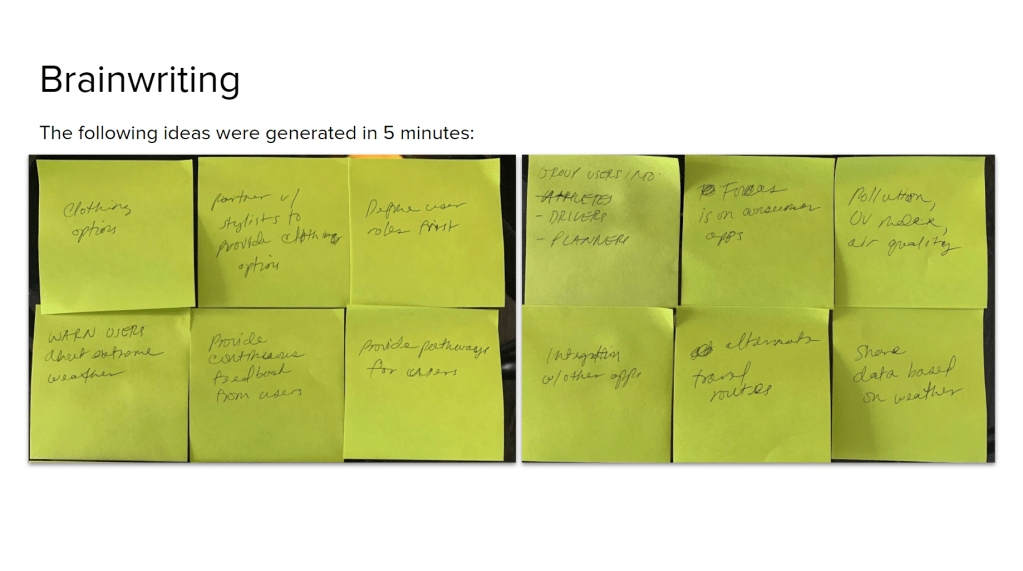
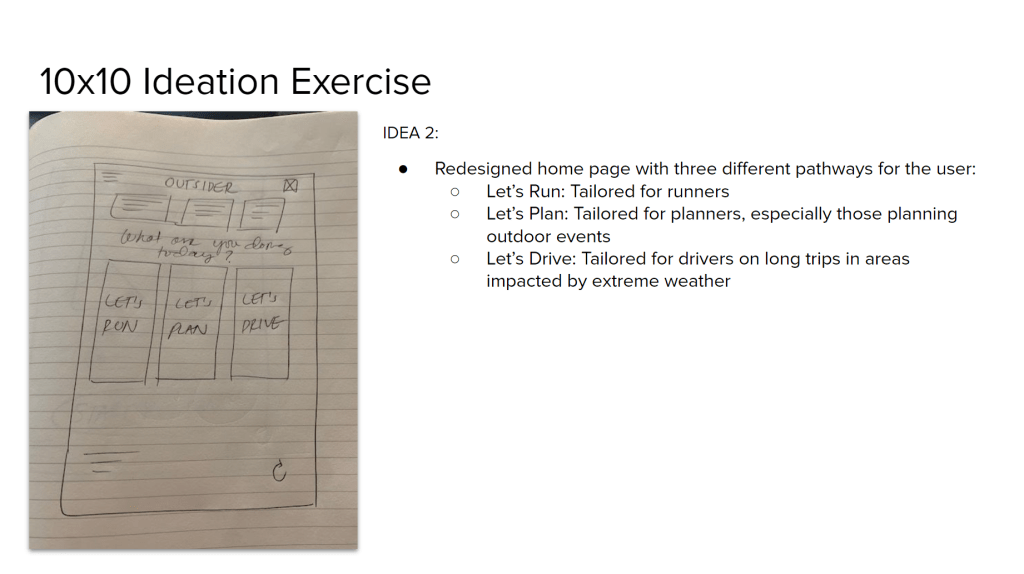
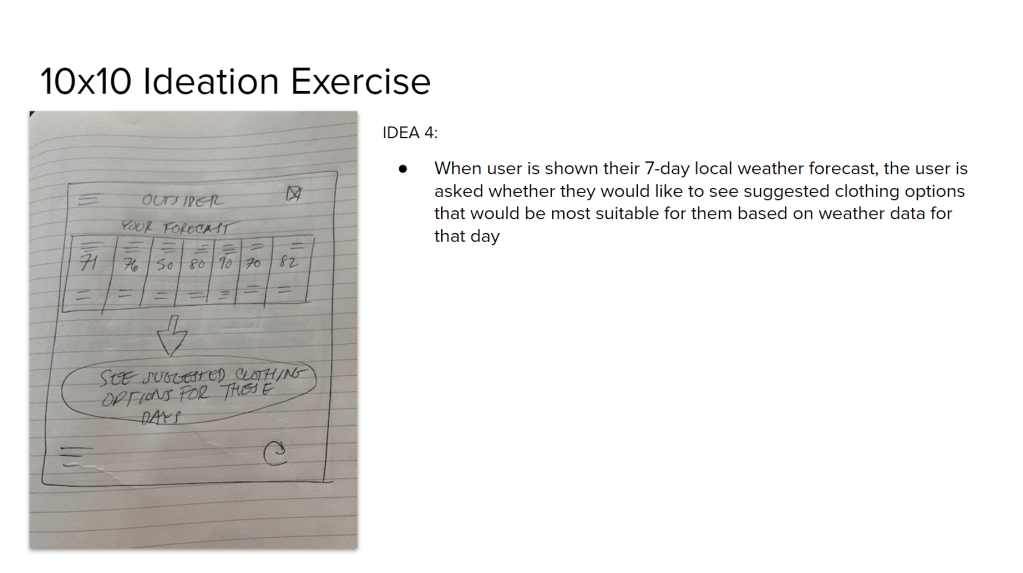
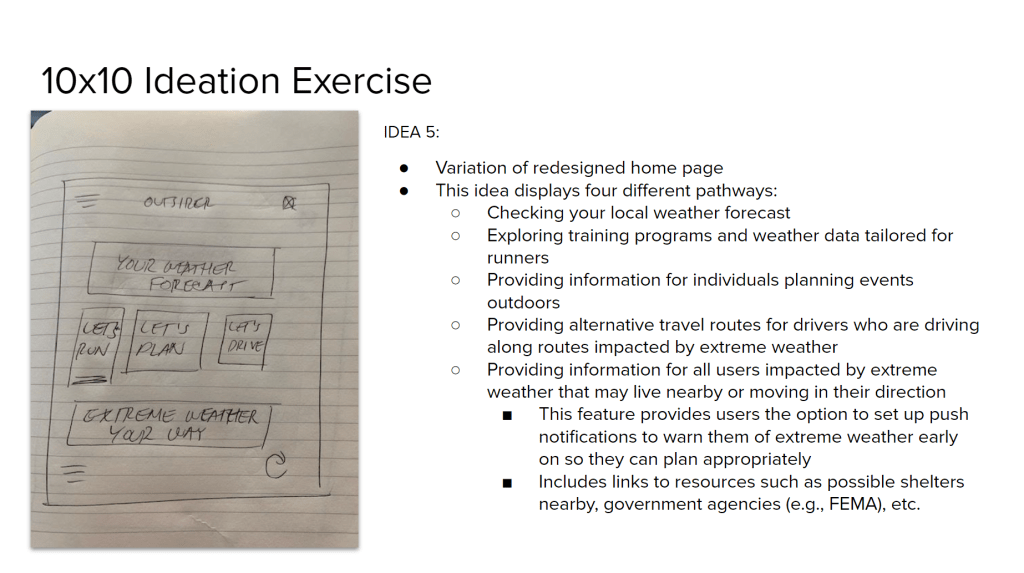
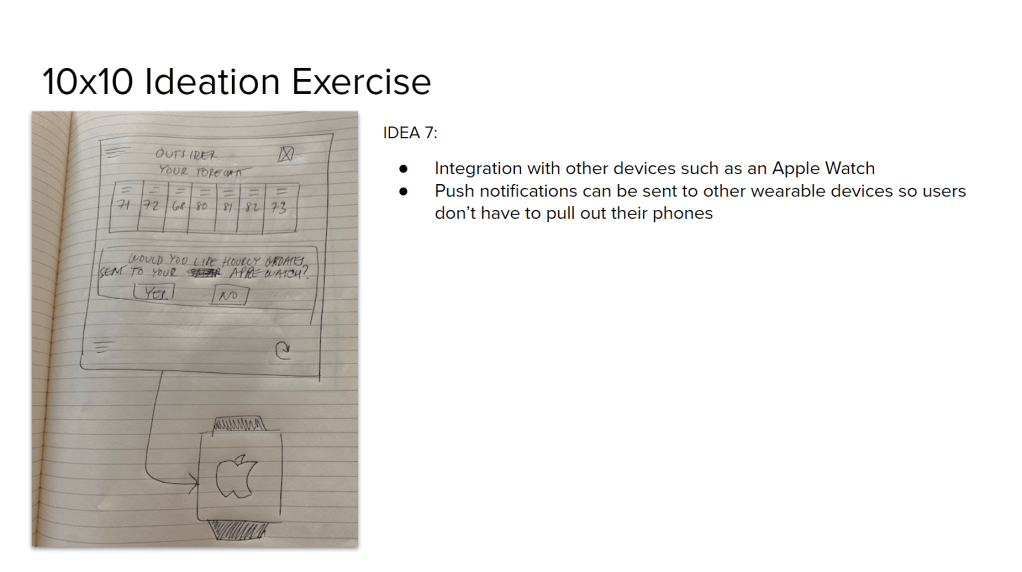
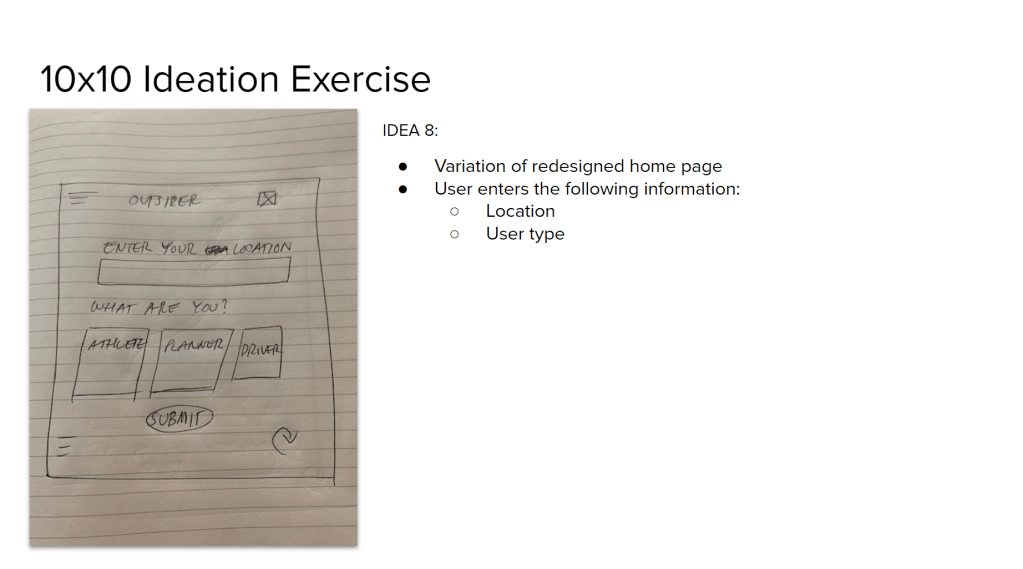
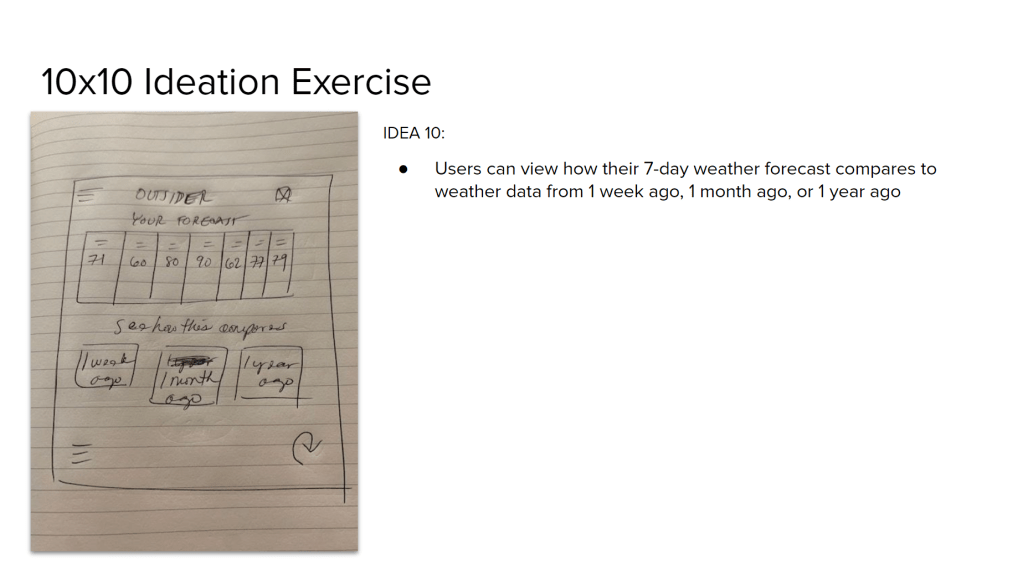
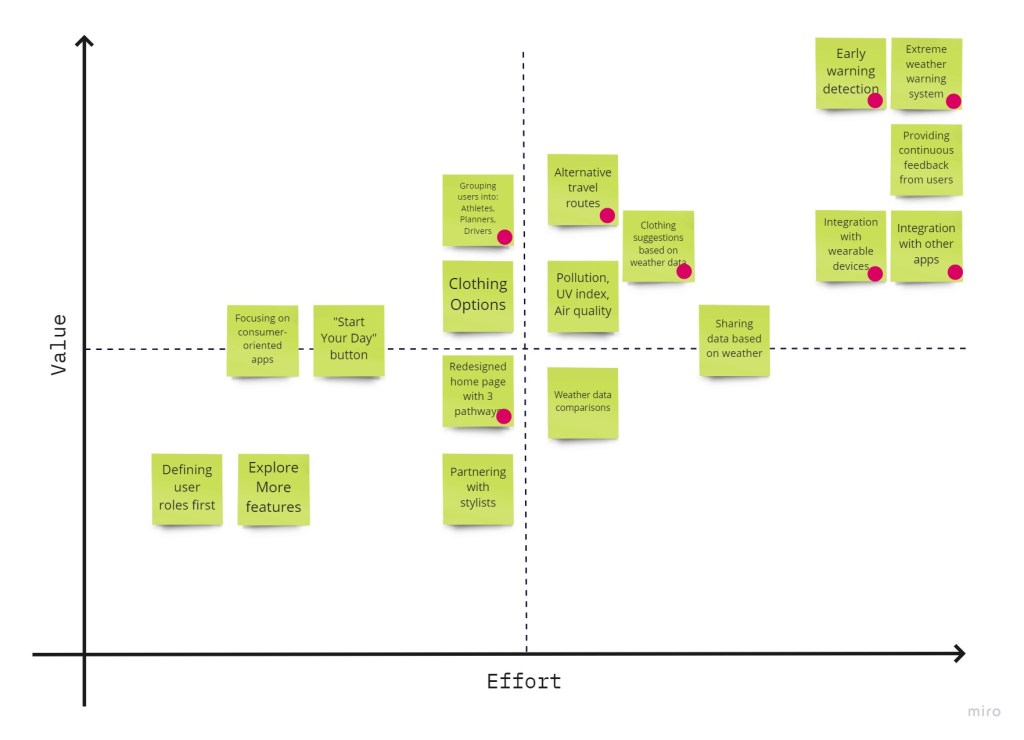
I completed several ideation activities to generate as many ideas as possible, including brainwriting and 10×10 sketching, and sorted these ideas in an idea portfolio chart as shown in the images below.

Concept
The concept I decided to pursue is an enhanced version of the app that expands its current set of capabilities centered around users of lifestyle-related/fitness-oriented apps in order to broaden its appeal to a wider audience. This enhanced version features three new role-based experiences that are highly dependent on weather conditions, which are accessible on the homepage. These are:
- Athlete: This journey provides the user with the option to integrate wearable devices with the app and on-demand virtual fitness training sessions and programs so they can complete their fitness routines in the most optimal weather conditions.
- Planner: This journey provides the user with detailed weather data and guidance to assist them with planning outdoor events, social gatherings, etc.
- Traveler: This journey focuses on drivers impacted by extreme weather conditions when traveling long distances and provides alternative routes so they can avoid heavy traffic and alerts to reduce the risk of danger to their personal safety.
Results
Prototype
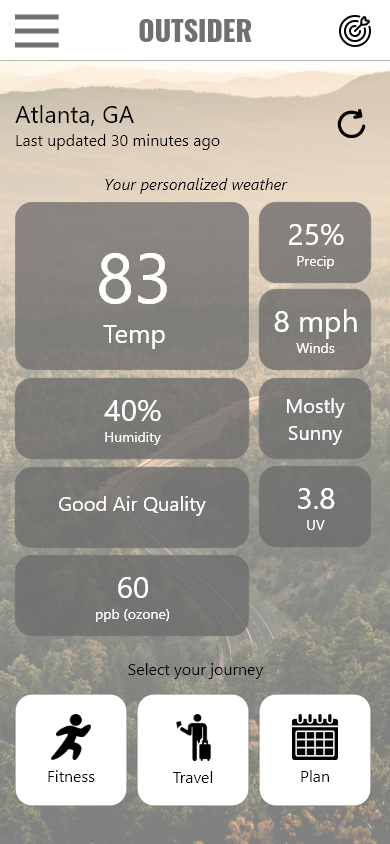
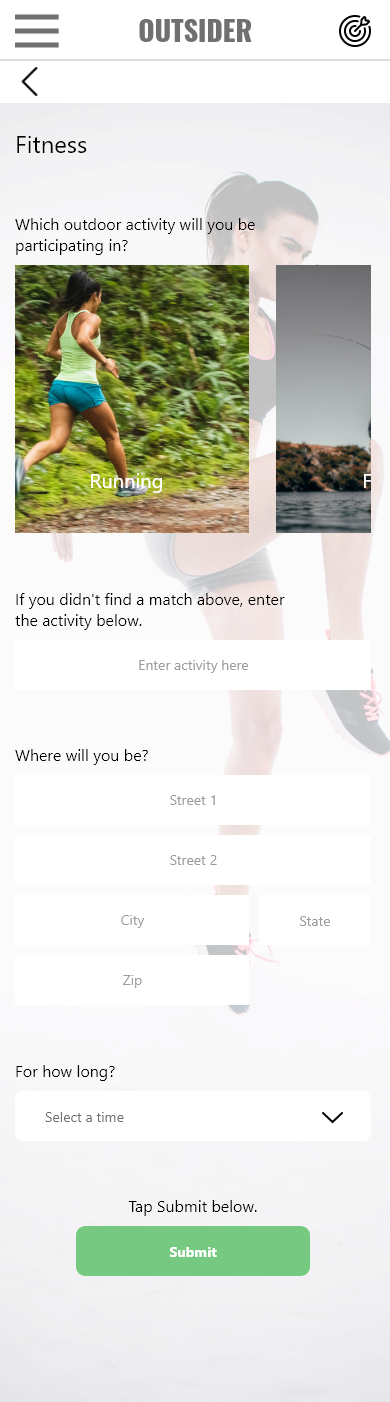
Based on my concept, I designed a high-fidelity clickable prototype comprised of the following four screens: Home, Fitness, Travel, and Plan. See below for detailed screenshots of the user interface for each screen.

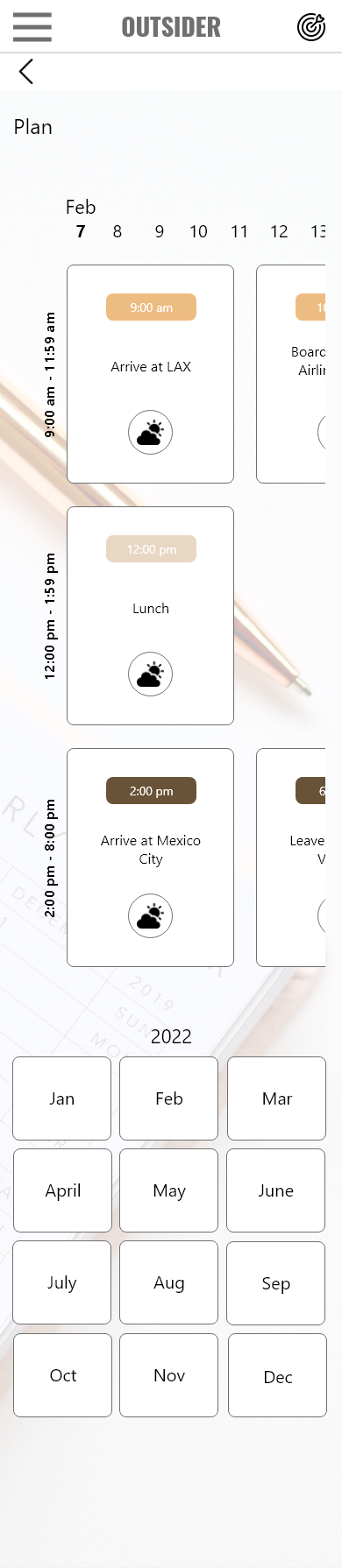
Click HERE to launch the clickable prototype. Note: This will open a new tab. Not all UI elements are active.
Key Features
- Home
- Personalized weather data, including two new data points (i.e., UV and ozone levels)
- Three new buttons to take user to the following screens: Fitness, Travel, or Plan
- Fitness
- Nine popular outdoor activities, including running, fishing, hiking, and more
- Text field to enter outdoor activity not already featured
- Text fields to enter location of selected activity
- Dropdown list to select timeframe of activity
- Travel
- Text fields to enter location of where the user is traveling from
- Text fields to enter location of where the user is traveling to
- Dropdown list to select timeframe of travel plans
- Plan
- Weekly view of planned activities
- Weather button located within each activity card to check weather conditions for that day
- Buttons to access other months to plan activities
Usability Testing Feedback Highlights
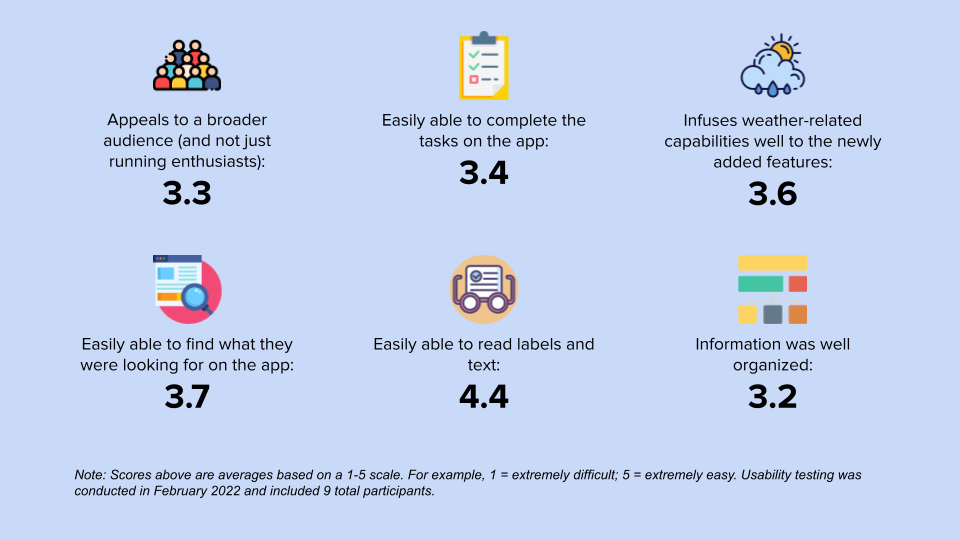
I conducted unmoderated usability testing to better understand and identify the prototype’s strengths and weaknesses. Early results indicate the enhanced Outsider app achieved a moderate level of success in broadening its appeal to a wider audience beyond just running enthusiasts (Note: Avg. Score = 3.3 based on 1-5 scale (1 = extremely unsuccessful; 5 = extremely successful)). However, more work remains. Additional design updates will need to be made to address issues such as inadequate navigational cues, unclear outdoor activity search functionality, and excess amount of text fields. See below for key feedback highlights. Click here to view the follow-up survey used to gather users’ feedback.
“Weather hourly timeframe would be beneficial for activities, e.g., 60% chance of rain from 1 pm-4 pm. Also, geo-location search could be helpful for things like parks, lakes or trails in addition to your street address search fields under, ‘Where will you be?’.”
Mary, Early 40s, Director of Brand & Marketing
“I think everything looks good because it was easy to navigate and also the fonts are easy to read. I am never one to look at weather apps because I only look at the temperature. But I think more and more people who use apps in general would like to get the most information about whatever they are doing or planning to do so they can plan ahead. One can never be too prepared when planning a trip or activity!”
Jason, Late 30s, Social Media Manager
“On the Fitness page, it was unclear that I could swipe the images that specified each activity. My first thought was to search for hiking in the search bar. Maybe adding some arrows on the images would help indicate the scrolling feature.”
Johnny, Late 40s, Senior Financial Analyst
“For Travel, I think there’s an overload of input boxes. Maybe you can combine everything into one or two input boxes for where from and where to.”
Veronica, Mid-20s, Recent College Graduate
“Colored icons might help icon blocks pop and be easier to read.”
Sandra, Mid-30s, Digital Product Manager
Next Steps
The following next steps will need to be completed to address the problem statement and close out this case study:
- Iterate and refine the concept and prototype based on feedback gathered from usability testing
- Test updated prototype
- Collect additional feedback on updated prototype via future user research studies
- Provide final recommendation to address the problem statement
About The Weather Company:
The Weather Company, an IBM business, is a weather forecasting and information technology company that owns and operates weather.com and Weather Underground. They’re the world’s largest private weather enterprise and deliver up to 26 billion forecasts daily. Visit their website here.
My Role – UX Research & Design:
- Define the UX goals, objectives, and strategy
- Gather key insights via user research methods
- Develop prototype to address challenges raised by this case study
Project Duration:
1 month
Results:
- Enhanced Outsider app prototype with three new role-based experiences: Athlete, Planner, & Traveler
- Key insights derived from unmoderated usability testing feedback
 Jay Song